
Ray’s Late Reckoning
I Know This Much Is TrueRay’s life shifts from harsh authority and emotional avoidance toward grief, limited admission of past harm, and an imperfect bond with Dominick.
increasing Bearing strength in each event
 decreasing
Bearing strength in each eventdecreasingThe Household Enforcer
The Household Enforcer
Control as discipline
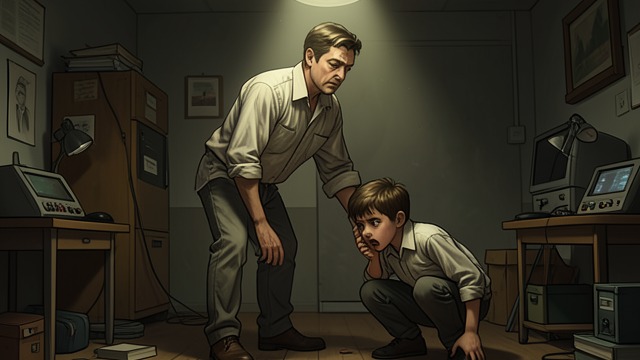
Ray governed the household through rules, shouting, and intimidation. He expected the boys to obey him, treated fear as something to overcome through toughness, and often singled out Thomas when the child seemed anxious or vulnerable.
Dominick learned to watch Ray closely and to protect himself by anticipating his moods. Ma also feared Ray’s anger and often tried to keep family conflict from reaching him, leaving the boys to absorb a confusing mix of affection, punishment, and silence.
Harm inside the family
Ray’s punishments could be frightening and humiliating, including striking the boys and disciplining them for crying. Dominick later admitted that Ray’s authority had made the house a place of fear, even though he struggled for years to name the harm clearly.
The family’s habit of hiding incidents became part of Ray’s legacy. Children were instructed not to explain what happened outside the home, and Dominick learned that loyalty could mean silence as well as protection.
A Reluctant Provider
A Reluctant Provider
The cost of college
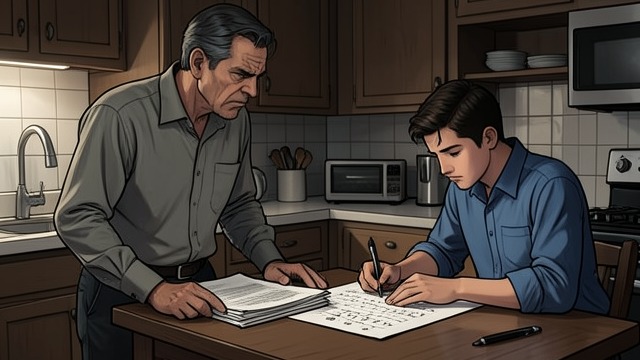
Ray initially opposed paying for Dominick and Thomas to attend college. He distrusted universities and preferred that the young men work or enter the Navy, reflecting his own belief in labor, military service, and practical survival.
Ma’s threat to take a job forced Ray to reconsider. He provided money for tuition, but continued to frame the support as a sacrifice and used Thomas’s poor grades as grounds for anger and humiliation.
Authority without understanding
Ray believed that Thomas needed discipline and toughness rather than a different kind of help. He struggled to understand the signs of emerging mental illness and treated Thomas’s failures as choices, not symptoms.
Dominick often intervened or redirected Ray’s attention, protecting Thomas in some moments but also reinforcing the idea that he alone had to manage the family’s crises.
Grief Kept at a Distance
Grief Kept at a Distance
Care through routine
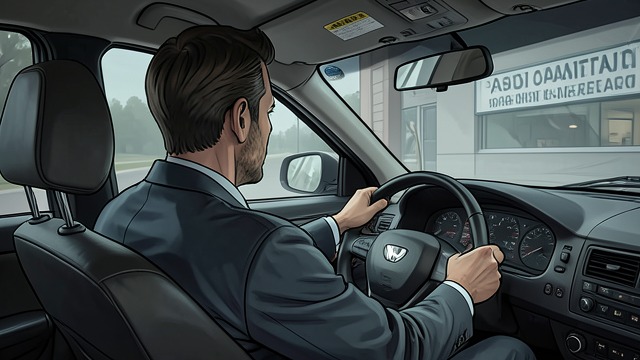
During Ma’s cancer treatment, Ray drove her to Yale–New Haven Hospital, kept her company, and then returned to work at Electric Boat. He rarely discussed his feelings, insisting that he could take care of himself while continuing to perform the practical duties of a husband.
When Ma died, Ray asked Thomas about her suffering and the return of Thomas’s “GOD = LOVE!” collage. He did not express grief openly, but the loss reshaped the household and left him alone in the large family home.
Avoidance and solitude
After Ma’s death, Ray slept downstairs and explained the move as protection against a neighborhood prowler. Dominick understood that the reason was more complicated: Ray avoided the empty bed and the feelings attached to his wife’s absence.
His solitude preserved his self-image as a tough man, but it also narrowed his life. He remained at work and in routine rather than speaking openly about loss or repairing old relationships.
The Knife and the Unspoken Grief
The Knife and the Unspoken Grief
A shock to Ray’s authority
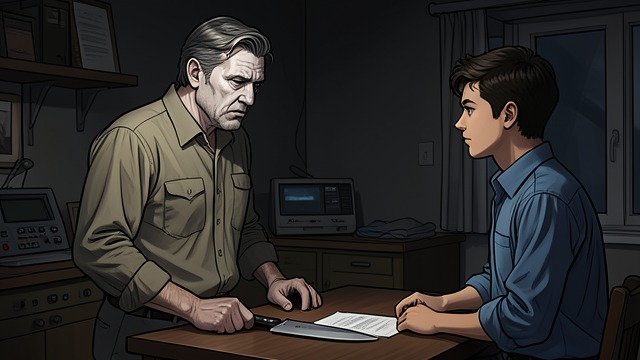
Ray returned from a fishing trip to learn that Thomas had used his World War II ceremonial dagger to amputate his hand. He was angry that the press presented the act as an antiwar protest, but he was also visibly shaken by what had happened to the stepson he had helped raise.
Dominick told Ray that he had refused reattachment because Thomas had insisted it was his choice. Ray later asked why Dominick had not allowed the surgeons to try, exposing how much he was struggling to accept both the injury and his own helplessness.
A claim of kinship
On their drive home, Ray called Thomas “my kid” and offered Dominick help with his painting job. These were small, awkward gestures, but they showed a claim of family that Ray had not always expressed aloud.
He still blamed Ma’s indulgence for Thomas’s vulnerability and remained unable to discuss the household’s full history. Yet for a moment, grief and concern broke through his practiced toughness.
The Father Who Stayed
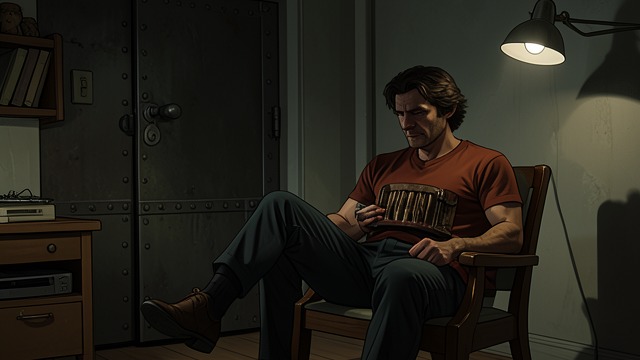
The Father Who Stayed
Grief and absence
After Thomas drowned, Ray attended the funeral and shared the public confrontation in which Dominick accused him of having helped harm his brother. Ray defended the fact that he had adopted the twins and insisted he had tried to provide for them, revealing both his pride and his inability to face the damage his anger had caused.
When Ray later lost his leg to complications from diabetes, Dominick visited him, brought clean clothes, and helped him adapt to rehabilitation. Ray’s dependence reversed the old relationship: the once-powerful disciplinarian now relied on the son he had treated as a rival.
A partial reconciliation
Ray’s stories about his own childhood and his birth mother, Edna, revealed a life shaped by instability and abandonment. He explained that he had acted from the belief that a tough world required tough children, without claiming that this justified what he had done.
His final effort was an imperfect form of honesty. He told Dominick he had never known the twins’ biological father and that Ma had kept that subject outside their marriage. Ray could not undo the past, but he had stayed, cared for Dominick, and finally offered him a truth he had kept for decades.
Dominick and Thomas’s childhood on Hollyhock Avenue
1968 through Thomas’s early college failure
Ma’s cancer diagnosis in 1986 through her death in 1987
October 1990 after Thomas’s hand amputation
Thomas’s death through Ray’s amputation and rehabilitation
